Sunday

iPhone 12 Pro vs iPhone 12 Pro Max: what's different between Apple’s best phones?

 Battle of the Pros, as Apple’s shiny flagships go head to head
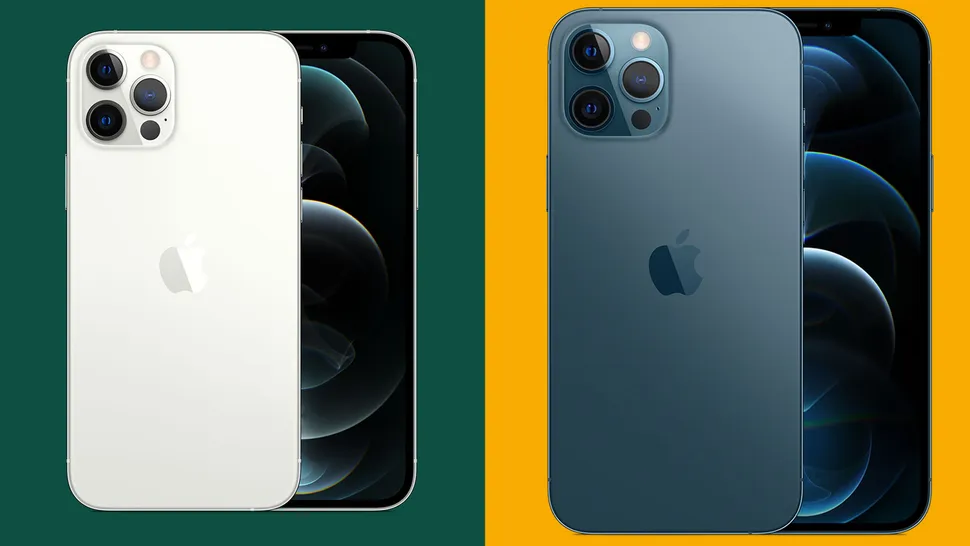

(Image credit: Apple)

After several years of incremental updates, the sharp-edged iPhone 12 family has successfully cut through our smartphone apathy with a bold new outlook.

Right at the top of this bulging roster sits the iPhone 12 Pro Max and the iPhone 12 Pro, two lean and speedy apex predators ready to pounce on their rotund rivals.

But how do they square up to one another? Which is more worthy of the ‘Pro’ title? And, most importantly, which is the better phone? Let’s take a closer look.

iPhone 12 Pro vs iPhone 12 Pro Max price and availability 

The 128GB iPhone 12 Pro hit shops on October 23, 2020, with prices starting from $999/£999/AU$1,699 for the 128GB model. If you want 256GB, you’ll need to stump up $1,099/ £1,099/AU$1,899, while a range-topping 512GB model costs $1,299/ £1,299/AU$2,219.

There was a slight delay in the iPhone 12 Pro Max hitting stops, courtesy of the Covid–19 outbreak hitting supply chains hard. It finally landed on 13 November, 2020 at a cost of $1,099/ £1,099/AU$1,849 for 128GB of storage, rising to $1,199/£1,199/AU$2,019 for 256GB, and $1,399/£1,399/AU$2,369 for 512GB.

The above prices are those stated on Apple’s own official store, but you won’t tend to find major savings from third-party retailers. Apple gear holds its value, and we’re still relatively early in the iPhone 12 range’s lifespan.

Design

Apple really reset the design clock with the iPhone 12 family. A new angular approach stands in stark contrast to the rounded, softened efforts of the past six years.

Both the iPhone 12 Pro and the iPhone 12 Pro Max are just 7.4mm thick, and sport dead-flat surfaces on all four edges. Only the tightly rounded corners betray any hint of curvature, much as they did with the iPhone 4 and iPhone 5 years prior.

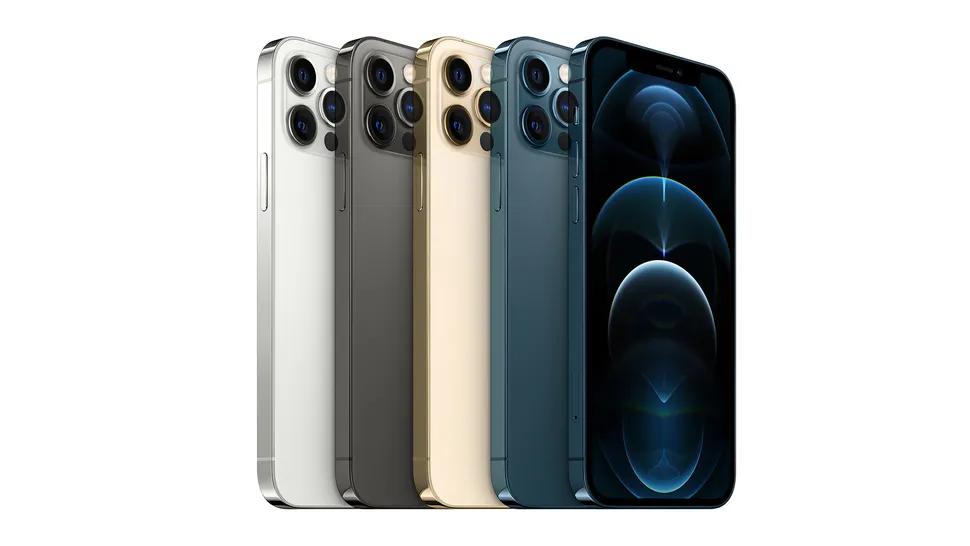
If you didn’t have anything to provide a sense of scale, you’d find these two young Pros to be identical. Both are available in the same range of four finishes – Silver, Graphite, Gold, and Pacific Blue – and each comes with the same shiny fingerprint-attracting stainless steel rim.

The reason the iPhone 12 Pro Max is so big, of course, is that it has a whopping 6.7-inch screen, dwarfing the iPhone 12 Pro’s 6.1-inch alternative.

Size aside, though, these displays are remarkably similar. We’re looking at a pair of Super Retina XDR OLEDs, with roughly the same 460ppi(ish) pixel density, the same HDR10 credentials, and the exact same brightness specifications (800 nits typical, 1200 nits peak).

They’re stunning screens, capable of outputting bold yet accurate colors and deep blacks. But they also share the same glaring flaw – the lack of a fast refresh rate.

Neither screen can accelerate beyond 60Hz, just like their predecessors. With their Android rivals hitting 90Hz or even 120Hz as a matter of course, this is a bit of an oversight.

Especially when Apple set the standard for Pro-themed 120Hz display technology with ProMotion, which made its debut in the 2017 iPad Pro. It should really have made its way into these two Pro phones, too, maybe as a point of difference to the iPhone 12 and iPhone 12 mini.

Besides this downer, we found both screens to be among the best out there at rendering images and video.

Camera

So far so similar, but we’ve now reached one of the key differences between the iPhone 12 Pro Max and the iPhone 12 Pro – at least on paper.

While both phones have a trio of 12-megapixel sensors covering wide, ultrawide, and telephoto angles, and a LiDAR sensor to improve low-light autofocus, there are a couple of key differences.

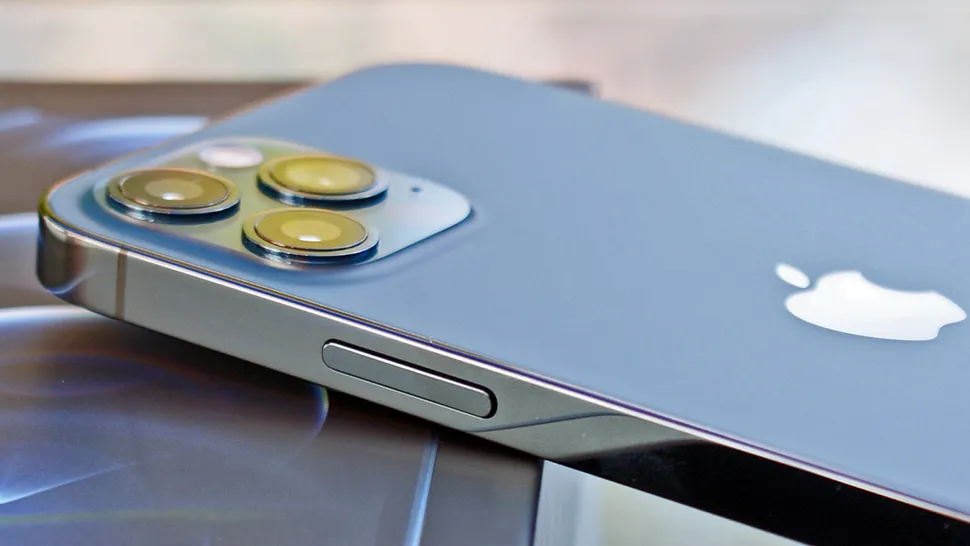
First and foremost among these is a 47% larger image sensor for the main wide camera. This explains the reason the Max’s camera module is noticeably bigger, but it also has the simple benefit of letting in way more light than its little sibling.

As a result, the iPhone 12 Pro Max is the low-light king, even in an iPhone 12 range packing a uniformly brilliant Night mode. The larger phone’s telephoto lens also goes to a longer 2.5X, compared to the iPhone 12 Pro’s 2X, although both succeed in getting closer to the wide sensor in tone and quality than before.
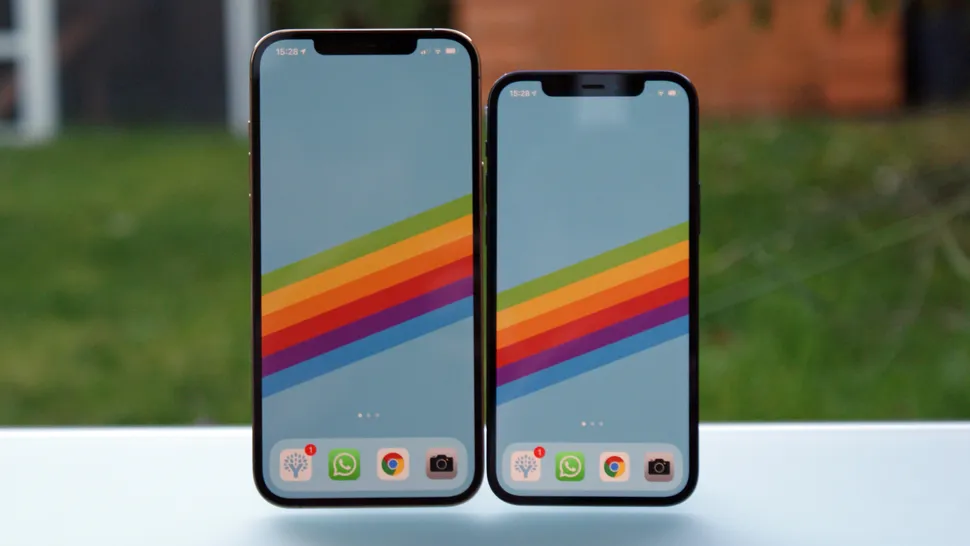
The reason the iPhone 12 Pro Max is so big, of course, is that it has a whopping 6.7-inch screen, dwarfing the iPhone 12 Pro’s 6.1-inch alternative.

Size aside, though, these displays are remarkably similar. We’re looking at a pair of Super Retina XDR OLEDs, with roughly the same 460ppi(ish) pixel density, the same HDR10 credentials, and the exact same brightness specifications (800 nits typical, 1200 nits peak).

They’re stunning screens, capable of outputting bold yet accurate colors and deep blacks. But they also share the same glaring flaw – the lack of a fast refresh rate.

Neither screen can accelerate beyond 60Hz, just like their predecessors. With their Android rivals hitting 90Hz or even 120Hz as a matter of course, this is a bit of an oversight.

Especially when Apple set the standard for Pro-themed 120Hz display technology with ProMotion, which made its debut in the 2017 iPad Pro. It should really have made its way into these two Pro phones, too, maybe as a point of difference to the iPhone 12 and iPhone 12 mini.

Besides this downer, we found both screens to be among the best out there at rendering images and video.

Camera

So far so similar, but we’ve now reached one of the key differences between the iPhone 12 Pro Max and the iPhone 12 Pro – at least on paper.

While both phones have a trio of 12-megapixel sensors covering wide, ultrawide, and telephoto angles, and a LiDAR sensor to improve low-light autofocus, there are a couple of key differences.

First and foremost among these is a 47% larger image sensor for the main wide camera. This explains the reason the Max’s camera module is noticeably bigger, but it also has the simple benefit of letting in way more light than its little sibling.

As a result, the iPhone 12 Pro Max is the low-light king, even in an iPhone 12 range packing a uniformly brilliant Night mode. The larger phone’s telephoto lens also goes to a longer 2.5X, compared to the iPhone 12 Pro’s 2X, although both succeed in getting closer to the wide sensor in tone and quality than before.


iPhone 12 Pro Max (Image credit: Future)

These hardware differences aside, we were surprised by the similarities in the quality of most shots between the two. This suggests that much of Apple’s photographic special sauce lies with its computational algorithms and its image processing – which are, of course, identical on both phones.

To that end, both phones have access to advanced Apple features such as Smart HDR 3 and Deep Fusion, which smartly select and combine exposures for more crisp, contrasty shots. Both also get to utilize the new ProRAW standard, which combines the data-packed raw format with the auto-adjusting computational improvements of JPEG.

Both phones have the notable ability to shoot Night mode shots across all four cameras – selfie cam included. That’s pretty darned impressive.

And on the video front, both Pros get to shoot Dolby Vision-enhanced video at 4K and 60fps, something their non-Pro brothers can’t quite stretch to.

In short, then, the iPhone 12 Pro Max has the better camera of the two, but the difference isn’t as marked as we’d expected.

Specs and performance

iPhones have become so fast that there’s almost no point to talking about Apple’s year-on-year improvements. Both the iPhone 12 Pro and the iPhone 12 Pro Max are way faster than their Android rivals, and a healthy 20% faster than last year’s Apple models.

When pitched against one another, however, there’s virtually no difference to speak of. Both phones pack Apple’s new A14 Bionic chip and 6GB of RAM, which are nigh-on identical in both benchmarks and our real-world experience

There isn’t a 3D game on the App Store that can make either handset break a sweat, with the same true for intensive tasks such as multitasking and photo editing. These phones are as fast as it gets right now, and probably will be until the iPhone 13 Pro and iPhone 12 Pro Max hit the market in late 2021.

We’re happy to see that Apple has finally upped its storage game with the two Pro models. Both now feature 128GB as standard, rather than the paltry 64GB of prior Pros. This can be upped to 256GB or 512GB at the checkout – at a steep price, of course.

Apple’s big selling point for the entire iPhone 12 range is 5G. Both the iPhone 12 Pro and the iPhone 12 Pro Max offer the ability to connect to the next-gen network, where available. And that really isn’t very many places at the time of writing.

We’d love to get more excited about 5G, but it’s still something for the future for the majority of people. It’s a good feature to have in the bank for when network operators get into a 5G rollout groove, though.

Battery life


iPhone 12 Pro (Image credit: Future)

The iPhone 12 Pro Max’s larger chassis has enabled Apple to include a huge battery – by Apple standards, at least. At 3,687mAh, the Max cell dwarfs its 2,815mAh brother.

It’s a little disappointing to realise that Apple has actually shrunken both batteries compared to their direct predecessors. That’s by more than 200mAh for the 12 Pro, and by almost 300mAh in the case of the Max.

When it comes to direct comparisons, though, the iPhone 12 Pro Max battery wins out comfortably, despite having to drive that larger display. It’s the longest-lasting member of the iPhone 12 range, and is the only phone of the four that will last through a full day of intensive use away from a Wi-Fi hotspot.

Use of 5G will inevitably see your battery level drop more dramatically, but as we’ve already discussed, this won’t be an issue for most people right now.

Apple has put its old MagSafe branding to a new magnetized accessory standard that benefits both phones. You can clip a wireless charger to the back of the phone, which works similarly to a Qi wireless charger, but is more secure.

Unfortunately, this MagSafe charger isn’t bundled into either box. Nor is any kind of charging plug, for that matter. All you get with both Pros is a USB-C-to-Lightning cable. If you want to take advantage of Apple’s new 20W fast charging, then you’ll need to spend $19/£19/AU$29 on the appropriate accessory.

Takeaway


The iPhone 12 Pro Max and iPhone 12 Pro (Image credit: TechRadar)

The iPhone 12 Pro and the iPhone 12 Pro Max are cut from the same cloth. It’s just that the latter uses a larger outline.

If you’re a fan of larger phones, the Max is the obvious choice. But if portability and one-handed use are more of a priority, then the Pro is the better pick. That’s the simplified conclusion that can be drawn from our comparison, but there are a couple of added points of nuance that tilt the scales a little.

Despite the similarities, the iPhone 12 Pro Max is the better phone overall. It comes with a superior camera that captures brighter, sharper low-light shots, and it also benefits from significantly longer battery life.

Committed photography buffs and power users should seriously consider the Max. It’s quite simply the best of the best, while the iPhone 12 Pro has much of its thunder stolen by the cheaper iPhone 12.

iPhone 12 vs iPhone 12 Pro: what are the key differences?


Courtesy: Jon Mundy from techradar.


iPhone 12 Pro range

iPhone 12 Pro (Image credit: Apple)

Tens of civilians’ killed in gruesome Nigeria massacre, UN says

 Farmers harvesting crops in Borno state attacked by armed men on motorcycles, in the ‘most violent direct’ assault against civilians this year, UN says.


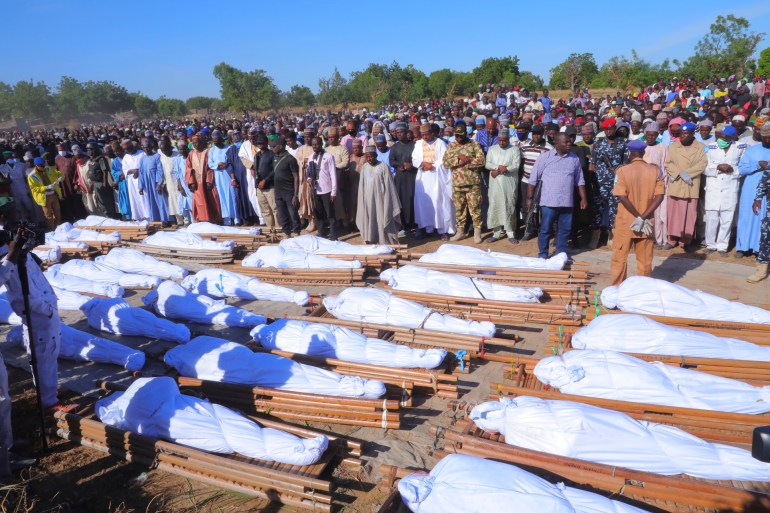
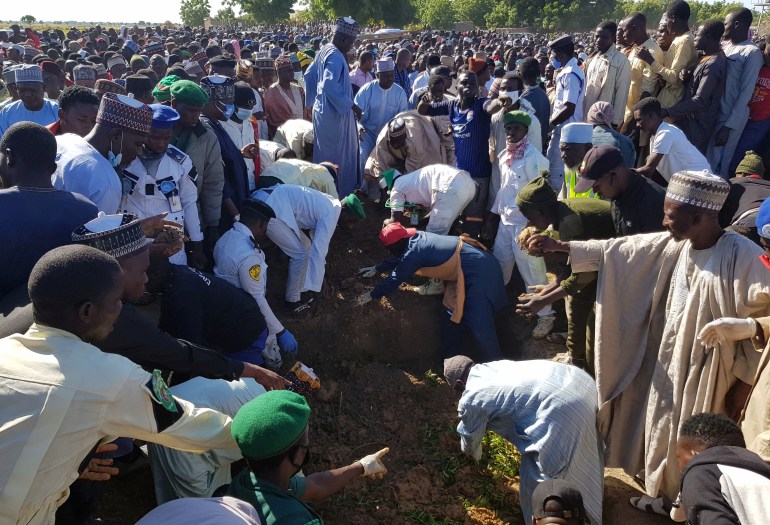
A “gruesome” massacre against farmers in northeastern Nigeria killed “tens of people”, the United Nations said late on Sunday, amending an earlier statement putting the death toll at 110.

The killings took place in the early afternoon of Saturday in the village of Koshobe and other rural communities in the Jere local government area near Maiduguri, the capital of the conflict-hit Borno state.

“Armed men on motorcycles led a brutal attack on civilian men and women who were harvesting their fields,” Edward Kallon, the UN’s humanitarian coordinator in Nigeria, said in the statement.

“Tens of civilians were ruthlessly killed and many others were wounded in this attack,” he added.

“The incident is the most violent direct attack against innocent civilians this year. I call for the perpetrators of this heinous and senseless act to be brought to justice,” Kallon said.

There has been no claim of responsibility for the attack, but the armed group Boko Haram and its splinter faction, the Islamic State in West Africa Province (ISWAP), have carried out a series of deadly assaults in the area in recent years.

Both groups are active in the region, where fighters have killed more than 30,000 people in the past decade during an armed campaign that has displaced some two million and has spread to neighbouring countries including Niger, Chad and Cameroon.


Nigerian President Muhammadu Buhari, who took office in 2015 promising to fix the security crisis, denounced the latest massacre.

“I condemn the killing of our hard-working farmers by terrorists in Borno state. The entire country is hurt by these senseless killings,” the president said via his spokesman.

But security analyst Sulaiman Aledeh said many in the country are growing frustrated with the authorities’ inability to contain the conflict.

“If you’ve seen [what happened to] Niger, President Mahamadou Issoufou had to sack his security chiefs when 89 soldiers were killed. So Nigerians are asking why are you keeping these people,” he told Al Jazeera from Lagos.

“The problem here has to do with the government of the day seems to be rewarding loyalty over professionalism. They [Nigerians] think by now the government should’ve tried a few good other men to get them out of this mess.”

‘So much suffering’

Earlier on Sunday, Borno Governor Babaganan Umara Zulum told journalists that at least 70 farmers were killed. He was speaking in Zabarmari village after attending the burial of 43 people whose bodies were recovered on Saturday.

Zulum urged the federal government to recruit more soldiers, Civilian Joint Task Force members and civil defence fighters to protect farmers in the region.

He described people facing desperate choices.

“In one side, they stay at home they may be killed by hunger and starvation; on the other, they go out to their farmlands and risk getting killed by the insurgents,” he said

Bulama Bukarti, an analyst at the Tony Blair Institute for Global Change, said the failure to control Boko Haram has devastated lives and the economy.

“The security forces are obviously losing this war,” he told Al Jazeera, describing 2019 as “the deadliest year” for Nigerian security forces since Boko Haram’s armed campaign started in 2009.

“About 800 security forces were killed, mostly in the first half of last year, and the Nigerian military responded by changing its strategy introducing what they called the ‘super camp strategy’ by which they withdrew soldiers from remote communities and rural areas and consolidated them in what they call ‘super camps’ in order to reduce military fatalities,” Bukarti said.

“The strategy succeeded in reducing military fatalities but the side-effect of that is that the Nigerian military has effectively surrendered control of rural Nigeria to Boko Haram fighters.

“You have Boko Haram ruling northeastern Nigeria and criminal gangs ruling the rural communities of northwestern Nigeria; this has a devastating effect on Nigeria’s economy and the future of the country entirely.”

Speaking to Al Jazeera from Maiduguri, Vincent Lelei, the UN’s deputy humanitarian coordinator for Nigeria, said people in the region “live in extreme fear” amid the prolonged crisis “which has led to so much suffering, so much displacement and destruction of livelihoods”.

“Borno state is a state with very good soil, there is a lot of water on the ground, and a lot of crops grow very quickly,” he said. “Given the opportunity, the livelihoods of the people could recover so quickly – but this insecurity, this problem of violence against unarmed civilians is reducing those opportunities.”


SOURCE : AL JAZEERA AND NEWS AGENCIES

Thursday

Healthcare workers across Africa share their coronavirus stories

Doctors and nurses from across the continent recount experiences of fighting the COVID-19 pandemic on the front lines.


With the number of confirmed COVID-19 cases rising in many African countries, healthcare workers across the continent have been at the forefront of the response to the disease.
As in other parts of the world, many of these doctors and nurses are confronted with challenges in the face of the coronavirus pandemic sweeping the globe, while others remain optimistic about the systems within which they operate.
Here, they share their stories of fighting the pandemic on the front lines. Some have chosen to remain anonymous.

Dr Bernard Hammond, president of Ghana Association of Doctors in Residency, Komfo Anokye Teaching Hospital in Kumasi, Ghana


With more confirmed cases every day, most of us are apprehensive about the availability of personal protective equipment (PPE). There has been a general shortage of basic protective equipment like facemasks, leading to reuse and prolonged use by health staff.
We are, however, quite resolute in fulfilling our duties, even in times like these.
The government's announcement that health workers will be exempt from paying taxes for three months and a 50 percent salary raise for those who routinely come into contact with confirmed cases have indeed served to boost morale. Our concerns regarding equipment also seem to be generating some favourable response from the government, evidenced by their promotion of the local manufacturing of PPE and other logistics to meet our needs in the clinical setting.
The government has established health insurance packages for healthcare workers and protocols have also been established at the facility level for the isolation and testing of any staff exposed in the line of duty. During the period of isolation, arrangements have also been made for them to be taken care of.
COVID-19 in Ghana (as of April 29) - Confirmed cases: 1,671 - Recoveries: 188 - Deaths: 16 


Dr Olusegun Olaopa, former president of Nigerian Association of Resident Doctors -  University College Hospital in Ibadan, Nigeria


Healthcare workers in Nigeria face challenging working conditions with no life insurance, inadequate pay and constant burnout. Thus, this pandemic has put more pressure on an already overwhelmed workforce already struggling with low morale.
With the spread of the virus, it is not enough to only provide protective equipment to those at the isolation centre, we need some form of it at all hospitals. Particularly because some doctors in the country that have been exposed to the virus were treating patients who had other ailments and had not been diagnosed with COVID-19. Meanwhile, politicians are using sophisticated protective gear.
We just need encouragement and appreciation so that we know our sacrifices will not be in vain. My department, which is a surgical specialty, has started adopting self-help to adapt makeshift protective materials.
On a positive note, the government has done well in raising awareness, closing borders and imposing a lockdown in three states. The Nigeria Centre for Disease Control is also working tirelessly to ensure the pandemic is being contained.
COVID-19 in Nigeria (as of April 29) - Confirmed cases: 1,532 - Recoveries: 255 - Deaths: 44 

Professor Moussa Seydi, head of infectious diseases department, Hospital Center University De Fann in Dakar, Senegal

The COVID-19 response unit has been well catered for, as the government provided us with enough equipment which they had procured in time. We also received sufficient training and instructions on procedures to follow.
Thus, here in the treatment centre, we feel safe. If we see a huge surge in cases then perhaps this could change.
I believe the government really has done its best; they also announced that healthcare workers will be given bonuses which many of them have already received.
COVID-19 in Senegal (as of April 29) - Confirmed cases: 823 - Recoveries: 296 - Deaths: 9 

Doctor in Bamenda, Cameroon

Authorities have done very little in ensuring our safety. Many districts in Cameroon have not received sufficient training, educational materials and PPE.
I learned about safety procedures online, however, many healthcare workers do not have access to the internet. Health workers also do not have access to priority testing - this is both dangerous to them and their patients.
As I speak, official figures suggest at least five doctors have died of the 44 deaths related to COVID-19.
No pay or extra financial support, coupled with constant power cuts at some hospitals, means morale is very low.
COVID-19 in Cameroon (as of April 29) - Confirmed cases: 1,806 - Recoveries: 915 - Deaths: 59 

Public health official in Liberia

The government partially considered the safety of health workers but there has been little commitment to see this through.
For example, health workers have not received hazard pay for months and many are demotivated and even considering strike action or quitting.
One front-line responder died after contracting the virus and we are yet to get any information regarding an insurance package which was supposedly set aside for the family.
COVID-19 in Ghana (as of April 29) - Confirmed cases: 141 - Recoveries: 45 - Deaths: 16 

Carol, a hospital nurse in Dar Es Salaam, Tanzania

I am horrified at the lack of action taken by the government - little direction, no transparency, they have refused to implement measures like lockdowns or close places of worship.
As front-line workers, we are simply being ignored and it is terrifying. We are being treated like collateral damage.
COVID-19 in Tanzania (as of April 29) - Confirmed cases: 480 - Recoveries: 167 - Deaths: 10 

Dr Thuranira Kaugiria, secretary-general of Kenya Medical Practitioners, Pharmacists and Dentists' Union, Nairobi branch, Kenya

To give credit where credit is due, an isolation and treatment facility for healthcare workers has been set up at Kenyatta National Hospital and the Kenyatta University Teaching Research and Referral Hospital in Nairobi.
Furthermore front-line workers at these hospitals that have been in contact with COVID-19 patients - from security staff to doctors - are being tested. This is also the case at Mombasa Coast General Provincial Hospital.
But it is not enough, the government has taken the PR path. They thank us in their speeches, but where is the PPE? Why are healthcare workers being harassed during curfew hours? When will we have comprehensive medical cover?
COVID-19 in Kenya (as of April 29) - Confirmed cases: 384 - Recoveries: 129 - Deaths: 14 

Mary, a hospital nurse in Nairobi, Kenya

A month ago, we downed tools at my hospital due to a lack of training. This has since been rectified.
Last week, President Uhuru Kenyatta announced a welfare package for healthcare workers - I'm sure it is in good faith but the politicians in this country have never appreciated us.
Regardless, we are committed to our jobs and to dealing with this pandemic.
Perhaps COVID-19 will finally lead to people valuing us; perhaps they will remember that we sign up to save lives - we don't sign up to kill ourselves in the process.

Surgical registrar in Harare, Zimbabwe

The relationship between this government and medics in the country has never been good, with many of us on strike since November 2019.
Ultimately, even during this pandemic, the government has shown us it does not care.
Earlier this month, the High Court ruled that the government must provide PPE for healthcare workers, yet many still do not have it. In March, we called for sufficient risk allowance and their $37 response was laughable. 
There is no screening or priority testing for healthcare workers, and neither is there any insurance package.
My wife and I are both doctors, we have two young daughters and sometimes you wonder whether going to work is even worth the risk. At this point it feels like a choice - don't go, don't get paid and die from starvation; go, contract the virus and risk dying from that.
COVID-19 in Zimbabwe (as of April 29) - Confirmed cases: 32 - Recoveries: 5 - Deaths: 4 

Junior doctor at a COVID-19 ward in South Africa

My hospital is better off than many others, yet I can't say I feel fully safe as I am concerned that as cases rise so will the shortage in equipment. This is something we are already seeing in the country.
Already between four of my colleagues and I, we only have three special visors which we share and reuse. Also, on the ward, there are often only two or three doctors dealing with very sick patients who have to wait 48 hours to get their results, and this is overwhelming.
The government's decision to enforce a lockdown and ban sales of alcohol was a good move on their part, though due to socio-economic factors the lockdown has meant there are people who are really suffering.
COVID-19 in South Africa (as of April 29) - Confirmed cases: 4,996 - Recoveries: 2,073 - Deaths: 93 

Junior doctor at surgical ward in South Africa

As soon as the country reported its first cases, authorities were quick to provide the hospital with information regarding how the outbreak would be managed.
In terms of front-line workers, as soon as you enter the hospital, you are screened and your temperature is checked. If you feel even one of the symptoms, they test you and send you home and our results are fast-tracked, so we get them within 24 hours.
One big concern is the impact this situation can have on the mental health of front-line staff, especially those that have to isolate from family or live alone.
Some of the interviews have slightly been edited for brevity
SOURCE: AL JAZEERA NEWS